
There is a question that rarely gets asked directly, but sits behind a great deal of human conflict, persuasion, and why people respond so differently to the same news or the same truth: Can belief be produced by force? Can someone be made to believe? And if not — what is belief, exactly, and how does it actually come about?
These questions arise wherever truth makes a claim on the human mind. The same argument moves one person and leaves another unmoved. The same evidence convinces one and fails to convince the next. Understanding why that divergence happens turns out to be worth far more careful thought than it usually receives.
To understand it, we need to start somewhere most people never think to look — with the nature of belief itself.
What Is Belief?
Consider that most people reading this once believed in Santa Claus. Children in Western culture are told from infancy that a man in a red suit delivers gifts on Christmas Eve. Many also believed in the Easter Bunny, the Tooth Fairy, and a host of similar figures maintained by the trusted testimony of parents and culture. These beliefs were held genuinely. The child was not pretending, and was not irrational for holding them. They believed what they believed because the sources they most trusted said it was true, and nothing in their experience contradicted it.
Then, at some point, the belief collapsed — not because someone forced them to stop believing, but because the evidence shifted. A sibling told the truth, a parent admitted it, or the child's own reasoning finally caught up with the inconsistencies. The belief changed because the information changed.
Notice something important in that illustration: the children's belief did not make Santa real, and the collapse of that belief did not make him unreal. Reality was unchanged throughout. What changed was whether their minds were aligned with it. This is worth stating plainly: believing something does not make it true. Belief is not the creation of truth — it is the acknowledgment of it. The mind that believes is not producing a fact; it is recognizing one.
This illustrates something fundamental: belief is the mind's assent to a proposition as true, formed and sustained by what the mind takes to be reliable evidence or trustworthy testimony. It is not a feeling, though feelings may accompany it. It is not quite a choice either — you cannot simply decide to believe the sun is cold, no matter how hard you try or how much someone pressures you to say so. Belief is what happens to the mind when it accepts something as real.
Beliefs form through different channels. Some come from direct experience. Some from careful reasoning. But the vast majority of what any person believes — including most of what they believe about history, other countries, or people they have never met — comes from testimony: the word of someone they trust. The child believes in Santa because parents are the most authoritative source in a child's world. And when that authority is revised, so is the belief.
This also means beliefs are revisable. They are not fixed forever. When new information arrives that outweighs what the mind previously accepted, the belief adjusts. The child who once told classmates that Santa was absolutely real will one day tell his own children the truth. What changed was not the child's willpower but his information.
These two features of belief — that it is a response to trusted testimony and evidence, and that it cannot simply be commanded — turn out to be enormously important once we bring them to bear on questions of spiritual truth.
Belief Is a Response to Information
Belief is not a feeling. It is not an emotional experience, a decision of the will disconnected from evidence, or a leap into the dark. Belief is the mind's response to information received and assessed as true. You believe something because you have been presented with it, considered it, and accepted it as real.
The word proposition is worth pausing on. A proposition is a specific claim about reality — a statement that is either true or false. "The earth orbits the sun" is a proposition. "Abraham Lincoln was the sixteenth president" is a proposition. "Christ died for our sins" is a proposition. Each of these makes a definite assertion about what is real, and each can in principle be examined, supported with evidence, and affirmed or denied.
This matters because belief always has a specific object. You cannot believe in general — you believe something. And what that something is determines whether the belief is accurate or mistaken. A scientist who believes the wrong proposition about a compound may cause an explosion. A juror who believes the wrong proposition about an accused man may send an innocent person to prison. In every domain, the content of the proposition matters — not just the sincerity with which it is held.
All of this is true of belief in any domain. But when the propositions in question concern the nature of God, the condition of man, and the possibility of salvation, the stakes become different in kind. These are not propositions whose consequences can be tested in a laboratory or reversed in a courtroom. They concern eternity. And this is precisely where the gospel enters — not as a feeling to be cultivated or a spiritual mood to be achieved, but as a specific set of truth claims about what God has done, what man cannot do, and what faith is called to receive.
It is worth noting that when Paul uses the word faith, he is describing belief in its fullest expression — belief that has moved beyond intellectual assent to the point of trust. Belief recognizes a proposition as true. Faith believes it to the point of resting on it — not merely acknowledging that the bridge will hold, but trusting it enough to put your weight on it.
The starkest illustration of this distinction comes from outside Paul's letters to the churches — but the observation is entirely consistent with his teaching. James writes: "the devils also believe, and tremble" (James 2:19). The devils have belief — full intellectual assent to the fact of God's existence. But what they have is the opposite of trust. They tremble. Their belief produces fear, not rest. They believe more accurately than most men ever will, and yet they are as far from faith as it is possible to be. Belief without trust is not faith. It is simply accurate information held by someone unwilling or unable to rest in it.
This is precisely how Paul — a first-century apostle and scholar whose letters remain among the most carefully reasoned documents in human history — describes the mechanism of faith in Romans 10:
"So then faith cometh by hearing, and hearing by the word of God." — Romans 10:17
Faith has a source: the word of God. It has a pathway: hearing. There is no faith without content to believe. Blind faith — faith with nothing to believe — is not faith at all. It is wishful thinking dressed in religious language.
This is also what distinguishes genuine biblical faith from the religious sentiment that so often passes for it. Sentiment says: I feel that God is good, that things will work out, that I am basically accepted. The gospel says: "that Christ died for our sins according to the scriptures; And that he was buried, and that he rose again the third day according to the scriptures" (1 Corinthians 15:3–4). One is a mood. The other is a set of specific historical and theological claims — propositions — that can be examined, supported with evidence, and believed. And because a belief is only as accurate as the proposition it rests on, and sincerely believing it does not make it true, sincerity alone is not enough. This holds in every domain of human knowledge — a man who believes a false proposition reaches a false conclusion, and it is that false conclusion he then operates on, regardless of how sincerely he holds it. When the proposition in question concerns eternity, the stakes change entirely. A man cannot be saved by sincerely believing the wrong thing. The content of the proposition matters as much as the act of believing it.
This also means that the method by which a proposition is presented matters enormously. If belief is the mind's honest response to truth, the method of presenting that truth must itself be honest — engaging the mind rather than bypassing it. The moment a method works around the mind instead of through it, it may produce a response, but that response will not be genuine belief.
This is why Paul's method of ministry was never manipulation or spectacle. He engaged the mind through legitimate means — and those means are worth examining closely, because they stand in sharp contrast to how belief is so often sought today.
Reasoning, Alleging, Persuading — and What These Exclude
These were not abstract questions for Paul — he faced them everywhere he went. He reasoned, persuaded, and declared the gospel, and the result was always the same: some believed, and some did not. That pattern raises a question worth examining closely: what exactly did Paul do, and what did he refuse to do? Because his method tells us something important about the nature of belief itself.
The Book of Acts, while not a doctrinal treatise like Paul's epistles and letters to the churches, provides a detailed historical record of his ministry — and it gives us a remarkably consistent picture of how he worked. Wherever he went, the language describing his ministry clusters around one central activity: reasoning. He reasoned from the scriptures — and in doing so he opened their content, alleged their conclusions, testified from his own firsthand experience, and persuaded those who heard him. These are not five independent methods — they are the constituent parts of a single rational process, each describing a distinct dimension of what it means to reason honestly with another mind.
What all of these share is that they are inherently propositional. Paul was not inviting people to have an experience, cultivate a feeling, or adopt a spiritual posture. He was presenting specific truth claims — that Christ must needs have suffered, that he rose again, that this Jesus is indeed the Christ — and then supporting those claims with evidence drawn from the scriptures. His entire ministry operated at the level of the proposition: here is the claim, here is the evidence, here is the conclusion. That is the only approach that can produce genuine belief, because genuine belief is assent to a proposition — and propositions require engagement, not atmosphere.
Reasoning is the governing activity — the process of drawing conclusions from evidence and presenting them to another mind for honest evaluation. "And Paul, as his manner was, went in unto them, and three sabbath days reasoned with them out of the scriptures" (Acts 17:2). To reason with someone is to treat them as a rational agent — to say, here is the evidence, here is what it points to, now you evaluate it. It makes no appeal beyond the mind's own capacity to assess truth. It does not pressure, manipulate, or overwhelm. It presents, and then it waits.
This is also where something needs to be said plainly: logic is not the enemy of belief, nor is it the enemy of the scriptures. Logic is simply the set of rules by which valid conclusions follow from true premises. It does not determine what is true — it determines whether a conclusion is properly drawn from what is established as true. If the scriptures are true, then clear logical thinking about what they say will lead to true conclusions. It is muddled thinking, not clear thinking, that departs from truth.
Nowhere is this clearer than on Mars Hill in Athens. Paul knew his audience well — he had written that "the Jews require a sign, and the Greeks seek after wisdom" (1 Corinthians 1:22), and Athens was the center of that world. The Greek philosophical mind prided itself on its openness — willing to consider any idea and follow any argument, and as a result, susceptible to believing almost anything. Their altar to the Unknown God was a perfect expression of this: rather than risk offending a deity they had not yet identified, they erected a monument to cover the possibility. It was an acknowledgment, carved in stone, that their knowledge had a limit and their system had a gap. Paul seized on that gap — not to flatter their devotion, but to identify the Unknown God by name and reason from his nature to his works. He met the wisdom-seekers on their own ground, but with truth rather than philosophy. He did not accommodate their superstition. He reasoned against its premises.
Paul understood this completely. His epistles are dense with logical connectives — therefore, wherefore, for, if... then. His letter to the Romans is essentially a sustained logical argument, moving step by step from the guilt of all men through the justification of all who believe, with each stage following necessarily from the one before it. And in 1 Corinthians 15, Paul explicitly invites logical examination of the resurrection itself: "And if Christ be not risen, then is our preaching vain, and your faith is also vain... If in this life only we have hope in Christ, we are of all men most miserable" (1 Corinthians 15:14, 19). He follows his own proposition to its logical end without flinching — because truth can withstand that kind of examination. A man who feared logical scrutiny would never write that way.
The suspicion that logic undermines faith is almost always a suspicion that clear thinking will expose a belief not actually grounded in truth. Genuine faith, resting on the word of God rightly divided, has nothing to fear from careful reasoning. It welcomes it — because honest reasoning is the very path by which a man can assess the evidence and arrive at genuine belief rather than inherited assumption.
Opening is how reasoning presents its material. It is not research — research goes looking for new information. Opening draws out what is already there, making accessible what is contained within something — taking what is present but not yet visible and bringing it into plain sight. A lawyer who opens a case before a jury does not invent the facts; he arranges what the evidence already contains so that its meaning becomes clear to those who must evaluate it. A teacher who opens a difficult text does not add to it; he unpacks its structure so that what was opaque becomes followable. The material was there all along. The opening makes it apparent.
Paul employs this same method with the scriptures. When Acts 17:3 says he was "opening and alleging, that Christ must needs have suffered, and risen again from the dead," the opening was expository: he unfolded what the scriptures already contained and set it before his hearers. He did not add to them or impose meaning upon them. He drew out what was in them — and let the contents make their own case.
Alleging is what reasoning produces — the conclusion stated as established fact on the basis of what the evidence requires. In a courtroom, to allege is not to guess or speculate; it is to advance what the evidence requires. In any careful argument, the conclusion is the allegation the premises demand. A person who alleges something is not merely offering an opinion — he is staking a claim and standing behind the grounds on which it rests.
Paul's alleging was precisely this. Having opened the scriptures and shown what was in them, he asserted the conclusion as true — "Christ must needs have suffered, and risen again from the dead" (Acts 17:3). The phrase must needs is itself a logical claim: the conclusion does not merely follow from the evidence, it is demanded by it. This is not speculation. It is the confident declaration of a man who has examined what the scriptures contain and knows where they point.
Testifying is the evidence that reasoning works with — a form of knowledge that underlies almost all human understanding. We accept things as true because reliable witnesses report them. We believe ancient Rome existed, that the sun is 93 million miles from the earth, and that particular events occurred in history — not because we have personally verified any of these things, but because credible witnesses have reported them and their accounts hold up under examination. Courts depend on testimony. Medicine depends on it — a physician who ignores a patient's account of his own symptoms in favor of what he expects to find will miss the diagnosis. The weight of testimony rises with the credibility and proximity of the witness to what is being reported.
Paul's testimony carried unusual weight of this kind. He was not passing along what others had told him. He had himself encountered the risen Christ on the road to Damascus, received the gospel by direct revelation, and been commissioned as a witness. "Testifying both to the Jews, and also to the Greeks, repentance toward God, and faith toward our Lord Jesus Christ" (Acts 20:21). A witness does not argue you into believing — he reports what he has seen and known, and leaves you to weigh it. But the account of a firsthand witness to the resurrection, honestly examined, is not a light thing to dismiss.
Persuading is the effect of successful reasoning in the hearer's mind — what happens when opening, alleging, and testifying have done their work together and a reasonable mind accepts the conclusion it can no longer set aside. In any domain, persuasion is not something that happens to a mind against its will. It is the mind's own response to evidence it can no longer set aside. A well-argued legal case persuades not because it forces a verdict but because it makes the truth of the matter plain. A scientific argument persuades not by pressure but by demonstration. Persuasion is the legitimate end of every honest presentation of evidence.
At Corinth, Paul "reasoned in the synagogue every sabbath, and persuaded the Jews and the Greeks" (Acts 18:4). At Rome, he spent a full day "persuading them concerning Jesus, both out of the law of Moses, and out of the prophets, from morning till evening" (Acts 28:23). Persuasion is not a trick. It is the legitimate result of truth well presented — the mind moved by evidence to belief.
This also means that persuasion must reach completion. A man who is moved by the evidence, impressed by the argument, or brought near to conviction — but who has not fully accepted the conclusion — has not yet believed. Paul describes Abraham's faith in precisely these terms: "being fully persuaded that, what he had promised, he was able also to perform" (Romans 4:21). Full persuasion, not mere impression. And Paul's counsel to believers on matters of practice carries the same standard: "Let every man be fully persuaded in his own mind" (Romans 14:5). The measure throughout is completeness — the mind that has genuinely arrived at conviction, not the mind that is somewhere on the way to it.
One of the most striking illustrations of persuasion doing its proper work — and of its limit — comes in Paul's appearance before King Agrippa in Acts 26. Paul laid out his testimony, reasoned from the prophets, and pressed the case so effectively that Agrippa responded: "Almost thou persuadest me to be a Christian" (Acts 26:28). Almost. The evidence had reached him. The argument had moved him. He was not unmoved or dismissive — he was at the very threshold. And yet he stopped there.
Paul's response is as instructive as Agrippa's: "I would to God, that not only thou, but also all that hear me this day, were both almost, and altogether such as I am, except these bonds" (Acts 26:29). He does not press harder. He does not manufacture urgency or appeal to the crowd. He expresses genuine heartfelt desire — and leaves the response entirely to the king. This is what legitimate persuasion looks like at its limit: it brings a man to the door, states its case with everything it has, and then steps back. The crossing of the threshold is not the persuader's to compel.
Agrippa's "almost" is a word worth sitting with. He was a king. Believing Paul's message fully would have carried enormous social, political, and personal cost. The evidence had done its work on his mind — but something was holding the rest of him in place. That gap between "almost" and "altogether" — between being nearly persuaded and being fully persuaded — is precisely where many remain. Paul's own standard for genuine belief was exactly this: "being fully persuaded that, what he had promised, he was able also to perform" (Romans 4:21). Agrippa fell short of that measure. And what keeps a man short of it is seldom finally the evidence.
Notice what is absent from this entire list. There is no atmosphere engineering — no careful arrangement of music, lighting, and crowd momentum designed to produce an emotional state that carries people past their doubts. There is no social pressure — no appeal to what everyone around them is doing. There is no spectacle — no demand that signs and wonders be accepted as a substitute for an examined message. There is no intimidation — no threat of consequence designed to make unbelief too costly to sustain.
These absent methods matter, because they are precisely what much of what calls itself evangelism has relied on. And they all share a common feature: they work around the mind rather than through it. They produce responses, but those responses are not belief. They are emotional momentum, social conformity, or fearful compliance — any of which can collapse the moment the atmosphere changes or the pressure lifts.
Perhaps the clearest modern example is the sales technique — a methodology so thoroughly developed in commercial contexts that it has become a recognizable sequence: create desire, establish urgency, handle objections, and close. This sequence was designed to move a person to a decision regardless of whether genuine conviction is present. Its goal is the signed contract, not the changed mind. When this structure is imported into gospel proclamation and given spiritual labels, the machinery is identical even if the vocabulary is different. The altar call engineered for emotional momentum, the appeal timed to produce a response before reflection can set in, the counted decision — these follow the same logic as a sales closing technique. They are designed to bring a person across a line, not to bring them to honest belief. And what they produce is accordingly different: a social response made under pressure, not a mind that has examined the proposition and accepted it as true. The decision may look identical from the outside. The inside is not the same thing. A man who has responded under that pressure has not believed — he has calculated. And because belief cannot be manufactured by pressure, the response built on calculation tends to collapse the moment the atmosphere changes or the urgency lifts.
Paul's methods did none of this. Every tool he used was an appeal to the mind's rational faculty — presenting truth and letting the hearer's own evaluation of it determine the outcome. This is not a weakness in his method. It is what makes it consistent with the nature of belief itself.
It is also worth noting that Paul's commitment to these methods was not limited to initial gospel proclamation. His epistles are filled with the same reasoning, alleging, and persuading — aimed now at believers, working through doctrine step by step, drawing conclusions from scripture, pressing his readers to examine what they believe and why. Whether the subject was the distinct nature of the Body of Christ, the right division between Israel's program and Paul's gospel, the resurrection, the purpose of the law, or the believer's standing before God, the method never changed. He made his case from the scriptures, drew the logical conclusions, and left his readers to honestly evaluate them. The same principles that govern how a man comes to faith in the gospel govern how a believer grows in the understanding of any doctrinal truth. Belief — whether of the saving kind or the growing kind — is always a response to the word of God rightly handled.
Paul's own language makes the stakes of this clear. The goal of all his presenting, reasoning, and persuading was what he calls the acknowledging of the truth — "if God peradventure will give them repentance to the acknowledging of the truth" (2 Timothy 2:25), and "the acknowledging of the truth which is after godliness" (Titus 1:1). To acknowledge truth is not to create it. It is the mind coming into alignment with what is already real — recognizing a fact, not producing one. But Paul also knew the alternative. A mind that is not acknowledging truth is not simply in a neutral state. It is susceptible to the other option: "that they should believe a lie" (2 Thessalonians 2:11). Both are genuine belief. Both can be held with sincerity and conviction. The difference is not in the act of believing but in whether the proposition believed corresponds to what is actually true. This is why the methods matter. Legitimate persuasion aims at the acknowledging of truth. Everything else risks producing the other kind of belief entirely.
Openness and the Capacity to Believe
The mind does not receive information as a blank slate. Every person approaches new claims through an existing framework of prior beliefs, loyalties, and commitments. These act as a filter — determining not just what information gets in, but how it gets interpreted once it arrives.
This is why two people can hear the same argument and one finds it compelling while the other finds it absurd. The difference is not always intelligence. Often it is the posture each person brings to the information before it ever reaches them.
Consider the Bereans of Acts 17. When Paul came to Berea and preached Christ, the text notes that "these were more noble than those in Thessalonica, in that they received the word with all readiness of mind, and searched the scriptures daily, whether those things were so" (Acts 17:11). Two things distinguished them: readiness of mind — an openness to examine what was being said — and diligence in verification — they tested it against the scriptures. They were not gullible. They were open. And because they were open, belief followed: "therefore many of them believed" (Acts 17:12).
Openness to information is not the same as believing everything uncritically. It is the willingness to let evidence be weighed on its merits, rather than having already decided what the conclusion must be. A closed mind is not a careful mind — it is a mind that has pre-empted the process.
This plays out in ordinary human experience constantly. A juror who has privately decided the defendant is guilty before closing arguments will interpret every piece of evidence through that conclusion — reading innocent explanations as evasive and ambiguous evidence as damning. A scientist who has invested years in a theory will find reasons to question data that contradicts it, sometimes long after a disinterested observer would have revised the hypothesis. A person with a strong political conviction will read the same news story as confirmation of what he already believes, while someone of the opposite conviction reads it as evidence for the other side. The information is identical. The reception is determined by what was already there when it arrived.
This problem is compounded when the news itself cannot be trusted to report honestly. News, at its proper function, is testimony — an account of observed facts, honestly reported and supplied for honest evaluation. When that integrity holds, a person can at least work with accurate information even if his reception of it is filtered by his existing convictions. But when honest reporting gives way to narrative management, news becomes propaganda — the conclusion arrives pre-packaged, the evidence is selected to support it, and the mind receiving it is being managed rather than informed. A closed mind fed biased information is doubly removed from the truth. And what makes this especially dangerous is that propaganda rarely announces itself. It takes the form of news while abandoning its substance.
When the propositions in question concern God, sin, and salvation, these same dynamics operate — but now they run deeper, with higher stakes, and with a spiritual dimension that no merely human analysis can fully account for.
What closes a mind? Several things operate together.
Tradition is perhaps the most powerful. When a person has inherited a set of beliefs from their community, family, or religious institution, those inherited beliefs form the grid through which all new information is filtered. What confirms the tradition passes through easily. What challenges it is treated as suspect from the start — not because it has been examined and found wanting, but because it is new. Familiarity feels like credibility, even when it is not.
Pride does its own damage. When a man has publicly committed to a position — taught it, argued for it, staked his reputation on it — believing differently becomes personally costly. To believe otherwise is to admit he was wrong. The mind, protecting the self, will work very hard to avoid that conclusion. It will generate objections, find alternative explanations, and dismiss evidence that a disinterested person would find compelling.
Self-interest closes minds in a different way. Sometimes information is unwelcome not because it is unpersuasive but because of what accepting it would require. The gospel of the grace of God is the sharpest example of this. It declares that man contributes nothing to his own salvation — that Christ did it all, and the only appropriate response is to believe it and receive it as a free gift. For the proud man, this is not merely an intellectual challenge. It is a personal affront. Believing the gospel requires surrendering every claim to self-made righteousness, and the self resists that with considerable force.
Social and relational cost rounds out the picture. Belief does not exist in isolation. In many families, communities, and cultures, changing what you believe carries real consequences — broken relationships, lost standing, exclusion from the group. A person may convince himself that his objections are intellectual when they are actually relational. He cannot afford, socially, to believe. And so he will not examine the evidence honestly, because honest examination might lead somewhere he cannot go. King Agrippa is the sharpest biblical example of this. Paul had brought him to the very threshold of full persuasion — and his answer was almost. Not because the argument had failed, but because the line between "almost" and "altogether" was a line he could not cross as king without losing everything his world was built on. His verdict was social before it was intellectual.
There is a common social convention that captures this perfectly: "there are two things we don't discuss — religion and politics." The saying is presented as a mark of civility, but what it actually describes is a pre-emptive closing of minds to the two domains of human inquiry where the stakes are highest. Politics concerns how we govern our common life. Religion concerns eternity. These are arguably the most important questions any person can examine — and the social convention says: don't. In a society that prides itself on free speech, this convention marks those who do not truly hold to the idea — for free speech that excludes the most consequential questions is not really free speech at all. It is worth noting that the founders of this country thought these domains important enough to enshrine both freedom of speech and freedom of religion in the First Amendment — precisely because they are most in need of protection from suppression. To avoid what the founders constitutionally protected is not civility — it is a quiet surrender of the freedom they secured. The discomfort of honest disagreement has simply been elevated above the importance of arriving at truth.
All of these factors operate below the level of a fair hearing. They pre-determine the verdict before the case is heard. And this is precisely why the same truth that opens one mind slides off another — and why information alone, however clear and well-presented, does not automatically produce belief.
Belief Cannot Be Coerced
Here is a point with enormous implications: belief, by its very nature, cannot be forced.
Consider what happens when someone is coerced into signing a confession he knows to be false. The signature exists. The words are on paper. But the man has not come to believe he is guilty — he has calculated that the cost of resistance exceeds the cost of compliance. Remove the pressure, and nothing has changed in his actual assessment of the facts. Or consider the prisoner of war who repeats whatever statements his captors demand. He is not persuaded. He has simply learned what it costs to stay silent. In both cases, coercion produced a performance — not a conviction.
This is true in every domain where pressure is applied in place of evidence. The belief is never actually there — only the appearance of it. And nowhere does this matter more than in matters of eternal consequence.
You can force a man to say words. You can force compliance, conformity, and outward religious performance. Centuries of religious coercion have proven this. The Spanish Inquisition tortured thousands into confessing beliefs they did not hold — the confessions were extracted, but the beliefs were not changed. Charlemagne gave conquered Saxons the choice between baptism and death; they chose baptism, but no sword ever produced a believer. The Revocation of the Edict of Nantes in 1685 gave French Protestants the choice between conversion and exile — hundreds of thousands chose exile, and those who remained and outwardly conformed did not thereby become Roman Catholics in their convictions. The communist regimes of the twentieth century spent decades attempting to eradicate religious belief through systematic persecution, show trials, and forced renunciations — and religious faith survived in exactly the places it was most aggressively suppressed. In every case, coercion produced outward conformity or resistance — never genuine belief. Empires and institutions have compelled millions to undergo rituals, recite creeds, and submit to sacraments. But not one of those people was made to actually believe anything by that pressure. Coercion produces actors, not believers.
The moment belief is compelled by threat or force, it ceases to be belief and becomes survival behavior. A man who confesses Christ at gunpoint has not believed the gospel — he has made a calculation about his immediate safety. These are not the same thing, and God is not fooled by the difference.
Paul never once attempted to coerce belief, nor did he express surprise when persuasion did not always produce it. He presented truth, and he left the response to the hearer.
Fear Is Not Faith
Fear is a powerful motivator. It will move a man to say almost anything, do almost anything, and conform outwardly to almost any standard. But there is one thing fear cannot do: produce genuine belief. A student who raises his hand and agrees with his teacher to avoid embarrassment has not necessarily come to believe the teacher's point. An employee who publicly endorses a company policy he privately disagrees with, because dissent would cost him his position, has not changed his actual assessment. Fear compels behavior; it does not generate conviction. And the moment the pressure lifts, the behavior it produced tends to go with it.
The same principle operates in matters of faith. The idea that fear of consequences — fear of hell, fear of judgment, fear of death — can serve as the foundation of saving belief is a common confusion. It cannot.
Fear may be what first moves a person to listen. The reality of divine judgment is true, and Paul does not shrink from it: "Knowing therefore the terror of the Lord, we persuade men" (2 Corinthians 5:11). But knowing the stakes is not the same as trusting the Savior. Fear can bring a man to the door; it cannot produce belief in the one who stands behind it.
The gospel of the grace of God is, by its very nature, good news. It is the declaration that Christ died for our sins, was buried, and rose again (1 Corinthians 15:1–4), and that this finished work is the sole ground of our justification. Trusting that message is not a fear response — it is resting in accomplished fact. A man who "believes" only because he is terrified has not yet trusted the grace; he is still trying to escape punishment on his own terms.
Fear and faith are not the same instrument. Faith is belief that has arrived at trust — a settled resting on what has been believed — and fear is its opposite. Fear keeps a man in a defensive posture, managing his situation, trying to escape a threat. Trust is a man at rest, no longer managing but relying. A man driven by fear of judgment is not yet trusting the grace — he is still trying to secure himself by other means. The devils are the ultimate illustration of this. They believe — accurately, completely — and they tremble. Their belief produces the opposite of rest. Fear and trembling is what accurate belief looks like when it has never arrived at trust. A man driven by fear of judgment is in the same posture — he knows enough to be afraid, but has not yet rested in what God has done about it.
Fear may send a man to church; it cannot bring him to rest. Only faith in God's revealed truth does.
The Evidence: Man's Guilt and Sinful Nature
If genuine belief requires honest engagement with evidence, then the evidence must actually be presented. And the case that the gospel makes begins in an uncomfortable place — with man himself.
Paul does not ease into this. He builds a methodical prosecution in the opening chapters of Romans, drawing from the scriptures and from observable human experience, arriving at a verdict that leaves no one with a defense. The conclusion is stated plainly:
"For all have sinned, and come short of the glory of God." — Romans 3:23
Not most. Not the especially wicked. All. The word is universal and without qualification. But Paul does not simply assert this — he demonstrates it from two directions.
The first is creation. "For the invisible things of him from the creation of the world are clearly seen, being understood by the things that are made, even his eternal power and Godhead; so that they are without excuse" (Romans 1:20). The existence and character of God are legible in the created order. Man has always known enough to know that God exists and that he himself falls short of what God requires. This knowledge has not produced worship or gratitude — it has been suppressed. "Because that, when they knew God, they glorified him not as God, neither were thankful; but became vain in their imaginations, and their foolish heart was darkened" (Romans 1:21). The departure from God was not the result of ignorance. It was a choice, made against the light of available evidence. This is what makes it guilt rather than misfortune.
The second direction is the law. "Now we know that what things soever the law saith, it saith to them who are under the law: that every mouth may be stopped, and all the world may become guilty before God" (Romans 3:19). The law was not given to produce righteousness — it was given to produce a verdict. And the verdict is guilt. Every mouth stopped. No exceptions, no mitigating circumstances, no plea of ignorance accepted.
What makes this especially sobering is that Paul does not locate the problem merely in what man does but in what man is. Writing to the Ephesians, he describes the condition of every person outside of Christ: "dead in trespasses and sins... by nature the children of wrath" (Ephesians 2:1, 3). The phrase by nature is the key. This is not a behavioral problem to be corrected by better choices. It is a constitutional condition of the natural man — the kind that goes all the way down. And it entered through one man: "Wherefore, as by one man sin entered into the world, and death by sin; and so death passed upon all men, for that all have sinned" (Romans 5:12).
This is the evidence. It is not flattering. It is not what the natural man wants to hear. But if it is true — and Paul argues that it is demonstrably true — then it must be reckoned with. An honest mind, open to the evidence, cannot dismiss it.
The Evidence: Man Cannot Fix Himself
Having established the problem, the evidence turns to a second question: can man do anything about it on his own?
The problem is not merely behavioral — it is constitutional. A man cannot change his own nature any more than a leopard can change its spots. Though written to a different audience, the observation from the prophet is consistent with Paul's own teaching: "Can the Ethiopian change his skin, or the leopard his spots? then may ye also do good, that are accustomed to do evil" (Jeremiah 13:23). What a man is by nature, he remains by nature — unless something outside of his nature acts upon it. Every religion in the world proposes that man can do this on his own. Paul answers no — and his reasoning begins where the problem does: with death itself. A dead man cannot fix himself. Paul's language in Ephesians 2 is not metaphorical weakness — it is death. "And you hath he quickened, who were dead in trespasses and sins" (Ephesians 2:1). A corpse does not improve. It does not muster the will to respond. It does not reach up. Whatever the solution to man's condition is, it cannot begin with man.
Romans 5:6 names this directly: "For when we were yet without strength, in due time Christ died for the ungodly."
Paul uses the word ungodly here not as a personal insult but as a precise description of a condition — the same constitutional condition of the natural man the article has been establishing. It is not a verdict on a person's character relative to other people. It does not mean especially wicked or visibly immoral. It means simply what it says: without God, and therefore without the standing before him that his righteousness requires. In that sense, it describes every person by nature — not the worst among us, but all of us. If the word gives offense, that offense does not come from the label itself — it comes from the truth the label points to. And Paul himself names that offense: it is the offence of the cross (Galatians 5:11). The cross, God's solution, declares that no amount of human effort, moral achievement, or religious sincerity can secure a righteous standing before God — that what man cannot do for himself, God has done through Christ. That truth has always given offense to those who would rather earn their standing. And it is precisely that offense that makes the grace which follows so significant.
The phrase without strength means exactly what it says. Man has no capacity of his own to address his condition before God. He is not weakened — he is powerless. Christ did not arrive to assist a struggling man. He arrived for the ungodly, because ungodly men have nothing to bring to the transaction.
The law is particularly important to deal with here, because so much of religious effort is essentially an attempt to achieve righteousness through moral performance. Paul closes that door completely. "Therefore by the deeds of the law there shall no flesh be justified in his sight: for by the law is the knowledge of sin" (Romans 3:20). The law's function was diagnostic, not curative. It reveals what is wrong — it does not fix it. A thermometer that confirms a fever does not reduce it. Knowing the standard only deepens the awareness of how far short one falls.
Paul describes his own experience of this in Romans 7 with a candor that is almost painful: "For I know that in me (that is, in my flesh,) dwelleth no good thing: for to will is present with me; but how to perform that which is good I find not" (Romans 7:18). The problem is not lack of desire or ignorance of the standard. The problem is that the flesh — the natural man in his own strength — is simply incapable of producing what God requires. No amount of effort, discipline, or religious sincerity closes the gap.
Romans 8 gives the deepest explanation: "Because the carnal mind" — the mind of the natural man, operating according to the flesh rather than the Spirit of God — "is enmity against God: for it is not subject to the law of God, neither indeed can be. So then they that are in the flesh cannot please God" (Romans 8:7–8). The words neither indeed can be settle the question. This is not a temporary limitation that improved willpower might overcome. The natural man's mind is constitutionally opposed to God and constitutionally incapable of the subjection that God requires. This is why Paul's conclusion in Romans 7 is a cry of helplessness, not a resolution: "O wretched man that I am! who shall deliver me from the body of this death?" (Romans 7:24). The answer to that question cannot come from within. It must come from outside.
The Evidence: Grace Is the Only Solution
If man is guilty by nature, and if man has no capacity to alter that condition by his own effort, then the solution must come entirely from outside of man. We have already seen Paul name it — the cross, God's solution. Now he makes the case for what that solution actually accomplishes.
The pivot in Ephesians 2 is one of the most significant two words in all of the post-resurrection scriptures: But God.
"But God, who is rich in mercy, for his great love wherewith he loved us, Even when we were dead in sins, hath quickened us together with Christ, (by grace ye are saved)" (Ephesians 2:4–5). Everything that follows in Paul's account of salvation begins with a divine initiative. God acted — not because man deserved it, not because man sought it, but because God is rich in mercy. Grace, by definition, is given to those who have no claim on it. It is the opposite of a reward.
Romans 5:8 makes the timing explicit: "But God commendeth his love toward us, in that, while we were yet sinners, Christ died for us." Not after man improved. Not as a response to man's reaching toward God. While we were yet sinners. The action was taken toward enemies, not toward allies. This is what makes grace grace — it runs toward the undeserving.
The mechanism is substitution. "For he hath made him to be sin for us, who knew no sin; that we might be made the righteousness of God in him" (2 Corinthians 5:21). Christ, who had no sin of his own, was made sin — bearing the full weight of man's guilt. And in exchange, the man who trusts this is made the righteousness of God in him. The transaction is total: man's guilt transferred to Christ, Christ's righteousness credited to the believer. There is nothing for man to add to it, because the exchange is already complete.
The specific payment in this transaction was the blood of Christ — and this is not incidental. It is central to Paul's account of what God has done. To be justified, in Paul's legal language, is to be declared righteous before God — to receive the verdict of "not guilty." And Paul says this justification came through the blood of Christ: "Much more then, being now justified by his blood, we shall be saved from wrath through him" (Romans 5:9). God did not simply overlook sin or decide to set the debt aside. He received the blood of his own Son as the full and accepted payment for what his justice required. "In whom we have redemption through his blood, the forgiveness of sins, according to the riches of his grace" (Ephesians 1:7). Redemption — the buying back of what was forfeited — came through the blood. And the result was peace: "having made peace through the blood of his cross, by him to reconcile all things unto himself" (Colossians 1:20). The peace that now stands between God and the believer did not come without cost. It came through the blood of the cross, paid in full, accepted by the One to whom the debt was owed. And it is maintained by the same — not by the believer's ongoing performance, but by the finished work that established it. A peace secured by Christ's blood is not undone by man's failure. This is precisely why faith can rest in what it believes — the ground it rests on does not shift.
This is why Paul insists that justification is free: "Being justified freely by his grace through the redemption that is in Christ Jesus" (Romans 3:24). The word freely means without cost to the recipient. Not cheap — it cost God everything. But free to the one who receives it. And the receiving is by faith alone: "For by grace are ye saved through faith; and that not of yourselves: it is the gift of God: Not of works, lest any man should boast" (Ephesians 2:8–9).
This is the structure of the gospel. The evidence demands it. Man is guilty — therefore he needs justification. Man is powerless — therefore the solution must act on his behalf. Man deserves condemnation — therefore only a substitute can satisfy the justice of God. And grace, working through the death and resurrection of the Lord Jesus Christ, provides exactly what the evidence showed was needed and exactly what man himself could never supply.
"There is therefore now no condemnation to them which are in Christ Jesus." — Romans 8:1
That is not a wish or a hope. It is the conclusion of the evidence, rightly examined, honestly believed, and trusted — faith.
The God of This World Blinds Minds
If belief is simply a response to information, one might expect that a clear enough presentation of any truth would always produce it. But experience in any domain shows otherwise. Information can be suppressed before it reaches people. It can be framed in ways that distort its meaning. Propaganda works precisely because it controls what a population receives and how it is interpreted. Echo chambers reinforce existing beliefs by filtering out anything that might contradict them. And cultural or institutional gatekeepers routinely determine which ideas receive a fair hearing and which are dismissed before they can be honestly considered. The delivery of clear information to an open mind is never as simple as it sounds — there are forces that work against it at every level.
When Paul explains why the clear proclamation of the gospel does not always produce belief, he identifies a force of this kind — but one that operates at a dimension no human institution can match.
"But if our gospel be hid, it is hid to them that are lost: In whom the god of this world hath blinded the minds of them which believe not, lest the light of the glorious gospel of Christ, who is the image of God, should shine unto them." — 2 Corinthians 4:3–4
Paul uses the title the god of this world to identify Satan — the personal adversary of God and active enemy of truth, who exercises a ruling influence over the present age and the minds of those who do not yet know God. What he does with that influence is not argue against the gospel openly. He does not create resistance from nothing — human pride, tradition, self-interest, and social fear provide the raw material. He works with what is already there, reinforcing and amplifying the blindness until the light cannot get through. This is the dimension that human effort and persuasion alone can never overcome. He does not argue against it openly — he blinds. He operates at the level of the mind, preventing the light of the gospel from landing. The information is there; the capacity to receive it has been darkened.
This is not God forcing unbelief on anyone. It is the enemy working against the truth that God has made available. And it is why the gospel minister is utterly dependent on God to illumine what he proclaims. Paul could plant and water, but only God could give the increase (1 Corinthians 3:6). The spiritual blindness of the lost is not merely an intellectual problem — it is a satanic one, and only the light of God's truth breaking through can address it.
This also explains why Paul says the natural man — man in his unregenerate state, as he is apart from the Spirit of God — cannot receive the things of the Spirit of God:
"But the natural man receiveth not the things of the Spirit of God: for they are foolishness unto him: neither can he know them, because they are spiritually discerned." — 1 Corinthians 2:14
Without the illuminating work of God, the gospel sounds like nonsense to the darkened mind. This is not an excuse for unbelief — it is a description of the problem that only grace can solve.
Illumination: From Understanding to Sight
Before we can appreciate what the Spirit of God does in illuminating the darkened mind, it is worth observing something about how illumination works in any domain of knowledge — because the principle is not unique to spiritual things, even if the application is.
Consider how ordinary understanding actually happens. Information and understanding are not the same thing. A student can read a passage in a textbook and recognize every word without grasping the meaning. A younger child can be told something true and simply lack the cognitive development to receive it. A person encountering a new field of knowledge for the first time may hear perfectly clear instruction and find it opaque — not because the teacher failed, but because the capacity to receive the information has not yet been developed. The information is present. The understanding is not.
This is why we speak of things "clicking" — the moment when something previously heard but not grasped suddenly becomes clear. The information did not change. What changed was the capacity of the mind to receive it. Teachers have always known that their task is not simply the delivery of content but the cultivating of the conditions in which content can land. A good teacher does not merely talk — he works to open the mind of the student so that what is being said can actually be received.
Light metaphors pervade every language's vocabulary for understanding: "I see it now," "it dawned on me," "it became clear," "the light came on." This is not coincidence. The relationship between light and sight maps almost exactly onto the relationship between information and understanding. Light does not create objects — it makes already-existing objects visible. Understanding does not create truth — it makes already-existing truth perceptible. In both cases, the external reality is there; what varies is the capacity to apprehend it.
This principle operates even in the most technical and demanding domains of human knowledge. The mathematician who stares at a proof for weeks and then suddenly sees it is not receiving new information in that moment of insight — he is receiving new capacity to perceive the structure that was already there. Scientists have described the same experience. So have philosophers, poets, and craftsmen. Illumination is not the arrival of facts. It is the arrival of sight.
Now bring this into the spiritual domain — and the stakes become incalculable.
The evidence Paul presents in the gospel — the guilt of man, the powerlessness of the natural man, the substitutionary death of Christ, the free justification of grace — is all there in the written Word. It is clear, coherent, and well-supported. But the natural man who hears it does not see it. To him it is, in Paul's own word, foolishness. Not because the evidence is poor, but because the capacity to perceive its truth has been darkened. The problem is not in the information. The problem is in the eye.
This is not to say that God has left any man without light entirely. Paul is explicit that God himself is the one who provides it: "that which may be known of God is manifest in them; for God hath shewed it unto them" (Romans 1:19). The word manifest means made plain — openly declared, not concealed. God has actively shewed this to every man. The witness of creation confirms it: "the invisible things of him from the creation of the world are clearly seen, being understood by the things that are made, even his eternal power and Godhead; so that they are without excuse" (Romans 1:20). And Paul makes the same point in 2 Corinthians 4:2, in the very passage that follows with the blinding — the truth, he says, is "commending ourselves to every man's conscience in the sight of God" by its manifestation. It presses on every conscience. Paul adds that even those without the written law show "the work of the law written in their hearts, their conscience also bearing witness" (Romans 2:15). This light is real — God gave it, and he gave it to all. It is sufficient to establish that God exists and that man is accountable to him, which is precisely why Paul says it leaves all men without excuse. But it cannot do what it was never designed to do: illuminate the specific truth of the gospel. The light of creation reveals a Creator. It does not reveal a Savior, or the mechanism of grace, or the finished work of the cross. For that, a different and deeper illumination is required — one that the natural man, with all the light he already has, cannot reach or produce by his own effort.
The question then becomes what a man does with the light he already has. Paul presents two possible responses — and they move in opposite directions. The first is suppression: men who "hold the truth in unrighteousness" (Romans 1:18), turning their backs on what God has made plain and suffering the progressive darkening that follows. The second response is the one God designed the general light to produce. Paul's account of his Athens address in Acts — which, while narrative rather than epistle, records his own words and is consistent with what he establishes in Romans 1–2 — captures this precisely: God "hath made of one blood all nations of men for to dwell on all the face of the earth... that they should seek the Lord, if haply they might feel after him, and find him, though he be not far from every one of us" (Acts 17:26–27). The light in creation was never meant to be the final destination — it was designed to put a man in motion. The man who honestly receives what God has made plain and follows where it points will find himself reaching after something he has not yet found. And it is that reaching — the honest response to the light already received — that positions a man to receive the specific proclamation of the gospel. A man who suppresses the general light has already closed the door against more. A man who receives it has already begun the journey.
This is why Paul's question in Romans 10 carries such weight: "How shall they hear without a preacher?" (Romans 10:14). It is not a question about God's willingness — he "will have all men to be saved, and to come unto the knowledge of the truth" (1 Timothy 2:4), and "the grace of God that bringeth salvation hath appeared to all men" (Titus 2:11). The provision and the desire are universal. What the general light cannot accomplish — the specific illumination of the gospel — God has chosen to accomplish through the proclaimed Word. The ambassador is not carrying light into a total darkness God has maintained by design; he is bringing the specific light of the gospel to men who already carry the general light of creation, and in some, that general light has already done its intended work — it has put them in motion toward God.
This is precisely what the Spirit of God addresses.
Paul tells the Corinthians that the things God has prepared for those who love him cannot be reached by natural means — not by the eye, the ear, or the reasoning of the natural heart. Then he adds: "But God hath revealed them unto us by his Spirit: for the Spirit searcheth all things, yea, the deep things of God" (1 Corinthians 2:10). The Spirit is the agent of revelation and illumination. What the natural man cannot perceive, the Spirit makes visible. "Now we have received, not the spirit of the world, but the spirit which is of God; that we might know the things that are freely given to us of God" (1 Corinthians 2:12).
This is why Paul prayed for the believers at Ephesus in specifically optical terms: "That the God of our Lord Jesus Christ, the Father of glory, may give unto you the spirit of wisdom and revelation in the knowledge of him: The eyes of your understanding being enlightened" (Ephesians 1:17–18). The request is for illumination — not for new facts to be delivered, but for the eyes of the understanding to be opened so that what God has already revealed can be truly seen.
The most striking statement of this principle comes in 2 Corinthians 4:6, where Paul sets the work of God in the human heart directly alongside the act of creation: "For God, who commanded the light to shine out of darkness, hath shined in our hearts, to give the light of the knowledge of the glory of God in the face of Jesus Christ." The God who said let there be light in Genesis 1 is the same God who causes light to shine in the darkened human heart. The parallel is intentional. Before creation, the earth was without form and dark — not because the truth of what God was about to make was absent, but because the light to reveal it had not yet come. So with the natural man: the gospel is present, the evidence is there, but without the light that God alone can provide, it remains invisible.
This illuminating work is not a reward for sincerity or religious effort. It is grace — the same grace that justifies the ungodly. Man does not earn illumination by being sufficiently open-minded. God shines in darkened hearts because he is rich in mercy, as he said he would be, through the proclamation of the Word he has given.
And this is the crucial point: illumination does not bypass the Word — it works through it. "Faith cometh by hearing, and hearing by the word of God" (Romans 10:17). The Spirit does not illuminate apart from the proclamation of the truth. The Word is still the instrument. The Spirit is the one who makes the instrument effectual, using the seed planted and watered by human hands to give the increase that only God can give (1 Corinthians 3:6–7).
This is why the preaching of the Word is not futile, even in a world where the god of this world is actively blinding minds. The light is stronger than the darkness. And the God who commanded light to shine out of darkness at creation is still in the business of doing exactly that.
Some Believed, and Some Believed Not
Consider how people respond to any significant new information — the kind that, if true, would require something of them. A doctor delivers a diagnosis that demands a change of diet, medication, or surgery. Some patients accept the verdict and act immediately. Others seek a second opinion — not because the first physician was incompetent, but because the conclusion is unwelcome. Some acknowledge the problem intellectually but defer, telling themselves they will address it later, while later never quite arrives. Some reject the diagnosis outright, preferring the comfort of denial to the discomfort of action. The information is the same in every case. What varies is what the person does with it once it lands.
The pattern holds across every domain where information carries real consequences. A businessman shown clear evidence that his company is heading toward failure may act decisively — or may explain away the numbers, double down on what has not worked, and arrive at the conclusion he feared only when it is too late. A man confronted with evidence of a failing marriage may receive it honestly and change — or find a hundred reasons the evidence does not quite apply to his situation. In every case, the divergence is not finally about the quality of the evidence. It is about what accepting it would cost.
Of all the truth claims a person encounters in a lifetime, the gospel makes the highest demand. It is a specific set of propositions — that "Christ died for our sins according to the scriptures; and that he was buried, and that he rose again the third day according to the scriptures" (1 Corinthians 15:3–4) — and if these things are true, then everything this article has established follows: man is guilty and powerless, grace is the only solution, and the only appropriate response is to receive it as a free gift rather than earn it. That is not easy information for a proud man to receive. It requires him to revise not just an opinion but his entire assessment of himself and his standing before God.
There is also a further distinction worth making here. A man may assent to these facts as history — may accept that Christ died, was buried, and rose — without yet having believed the gospel in the sense Paul intends. What Paul calls belief is what this article has been calling faith: trusting those facts as personally sufficient, resting the full weight of one's standing before God on what Christ accomplished. Not merely knowing the bridge is there, but putting weight on it. This is the threshold Agrippa refused to cross — the evidence had reached him, but the trust had not followed. To acknowledge the truth of what Christ did is one thing. To rest in it as enough — for you, entirely, without addition — is faith. And it is precisely this that the acknowledging of the truth, which Paul sets as the goal of all his persuasion, is meant to produce.
Paul's experience at Rome at the end of Acts brings this entire reality into sharp focus. He had gathered the chief Jews of the city, "to whom he expounded and testified the kingdom of God, persuading them concerning Jesus, both out of the law of Moses, and out of the prophets, from morning till evening" (Acts 28:23). Every method this article has examined was in play — opening, alleging, testifying, persuading. A full day's careful reasoning, driven by the love of Christ, addressed to men who had the scriptures and knew them.
And the result?
"And some believed the things which were spoken, and some believed not." — Acts 28:24
Same message. Same messenger. Same morning. Opposite responses.
Paul does not explain the divergence. He does not blame his presentation, alter his method, or express shock. He simply acknowledges it and moves on. This is the consistent picture throughout Paul's ministry — truth is proclaimed, and individuals respond according to their own reception of it. Belief is not produced by the quality of the preacher. It is an individual response to truth, in a world where the enemy works against that response at every turn.
The proper response to this reality is not despair, but faithfulness. We are not responsible for results. We are responsible for rightly dividing and clearly declaring the word of truth. The outcome belongs to God.
The Love of Christ Constraineth Us
But if the outcome belongs to God, and if the natural man is blinded, and if belief cannot be coerced — what is it that keeps the one who carries this message going? What makes a man rise in the morning with the word of reconciliation on his lips, knowing that some will hear it and turn away?
Paul answers this without any ambiguity: "For the love of Christ constraineth us; because we thus judge, that if one died for all, then were all dead" (2 Corinthians 5:14).
The word constraineth is not the language of a gentle nudge. It describes being pressed on every side — hemmed in, compelled from within. The love of Christ leaves no room for silence. It presses out. And notice carefully what Paul identifies as the source of this pressure: not an emotional feeling about Christ, not a vague warmth, but a theological judgment. Because we thus judge. The constraint is the product of thinking clearly about what Christ's death means. If one died for all, then all were dead. The death was necessary because the need was total and universal. Every man Paul looked at was a man for whom Christ died — a man who was dead in trespasses and sins, without strength, a child of wrath by nature, carrying a guilt he could never address. That understanding, held clearly in the mind, produces a compulsion that no amount of discouragement or rejection can silence.
This is the proper motive for proclaiming the gospel — and it is worth contrasting with the motives that so often replace it. Duty compels a man to fulfill a requirement; love compels a man to meet a need. Obligation produces the minimum; constraint produces the sustained. A man who shares the gospel out of duty will stop when the effort exceeds the reward. A man constrained by the love of Christ remains faithful to the message through every discouraging response — because the constraint is not external; it comes from understanding what is at stake for those who have not yet heard.
It is worth being clear about what this means and what it does not. The faithfulness owed to the commission does not depend on the ambassador's affection for those he addresses. He is bound to deliver faithfully whether the recipients welcome it or reject it, whether they are friends or strangers. The duty is to the one who sent him. But Paul's ministry consistently exceeded that bare description — because the love of Christ, having constrained him to go and speak, also produced in him a genuine personal care for the people he was serving. This care was not a requirement of the role. It was the overflow of a man in whom the love of Christ was actually working.
Paul's description of his ministry at Thessalonica makes this plain: "But we were gentle among you, even as a nurse cherisheth her children: So being affectionately desirous of you, we were willing to have imparted unto you, not the gospel of God only, but also our own souls, because ye were dear unto us" (1 Thessalonians 2:7–8). He was willing to give not just the message but himself — because the people were dear to him. That goes beyond the minimum the commission requires. It is the natural expression of a man who genuinely loves those he serves. And in Romans 9, that concern reached a depth that is almost staggering: "I have great heaviness and continual sorrow in my heart. For I could wish that myself were accursed from Christ for my brethren" (Romans 9:2–3). No professional obligation produces that. Only love does.
This matters for how the message is carried. A man who ministers without love for those he serves will deliver truth correctly but coldly — the people in front of him are an audience to address, not souls he cares about. But a man who genuinely loves those he is speaking to carries the message differently. His reasoning is patient because he wants the listener to actually understand. His persuasion is honest because he wants the listener to actually believe. He is not managing a transaction. He is pleading on behalf of someone he cares for, in the name of One who loves them infinitely more. The difference is not in the content of what is said. It is in the spirit in which it is said — and those who hear can usually tell.
This matters more than it might first appear — because it touches the very openness of the one receiving. A man who senses he is being managed — even with accurate information, even by someone faithfully discharging a duty — has his guard up. He reads the pressure beneath the words. He feels the agenda, and his defenses respond accordingly. Truth delivered as a transaction tends to produce a transactional response: the hearer weighs the cost of compliance against the cost of resistance, and decides on those terms. But a man who perceives that the one speaking genuinely cares about him — not about his response, not about a duty met — receives the same truth in a different atmosphere. The love disarms what the argument alone cannot reach. It communicates something prior to the content: I am not here to win a point. I care what happens to you. And that perception, while it does not produce belief by itself, removes one of the barriers that most effectively prevents honest reception — the sense of being sold something rather than offered something.
Paul's image of the nurse caring for her children captures this exactly. A nurse does not strong-arm a patient into accepting treatment. She cares for him — and the patient, perceiving that care, becomes willing to receive what he might otherwise have resisted. The care itself creates the conditions under which truth can land differently. This is why Paul was willing to give not just the gospel but himself — "because ye were dear unto us" (1 Thessalonians 2:8). That genuine concern is perceptible. It does not replace the truth being spoken; it prepares the ground for it.
If you are reading this as someone who has not yet trusted the gospel, it is worth saying something plainly about what has brought it to your attention. You may have encountered it before in ways that felt like obligation — someone going through the motions, discharging a duty, or applying pressure that had more to do with their own agenda than with any genuine interest in you. Or you may have sat across from something that felt more like a sales presentation than a genuine conversation — where the structure was clearly designed to move you to a decision, where your objections were handled rather than heard, and where the goal was a response rather than your actual understanding. Both experiences are real and worth naming honestly. But it is not what the love of Christ produces in the man it has actually constrained. What Paul describes is not reluctant compliance — it is genuine personal concern for the specific person in front of you. Not a project to be completed. Not a decision to be extracted. And it is not an attempt to place you under a continuous weight of guilt — to make you feel worse about yourself with every telling. The guilt is real; this article has not softened it. But the entire point of naming it honestly is to bring you to the only place where it is fully and freely resolved. God does not offer relief from guilt as a reward for effort or religious performance. He offers it freely — "Being justified freely by his grace" (Romans 3:24). The rest that comes from trusting that finished work is not something you manufacture or maintain. It is something God supplies. The one who brought this to you did not do so to leave you burdened. They did it because they knew where the burden is actually lifted.
The stakes, in Paul's own description, are the ministry and word of reconciliation. "And all things are of God, who hath reconciled us to himself by Jesus Christ, and hath given to us the ministry of reconciliation; To wit, that God was in Christ, reconciling the world unto himself, not imputing their trespasses unto them; and hath committed unto us the word of reconciliation" (2 Corinthians 5:18–19). The word committed carries the weight of a trust — a stewardship placed in the hands of the ambassador by the one he represents. The gospel is not something Paul owns or invented. It was delivered to him (1 Corinthians 15:3), and it was committed to him to be passed on. To hold it back is not just a failure of nerve — it is a failure of stewardship.
Paul gives a name to this role that clarifies everything about it. An ambassador, in the familiar sense, is a person appointed by one authority to represent that authority's interests and carry its message to others. He does not speak for himself — he speaks on behalf of the one who commissioned him. His words are not his own. His authority is not his own. He is entirely dependent on the one he represents, and his task is faithfully to deliver what he has been sent to say.
"Now then we are ambassadors for Christ, as though God did beseech you by us: we pray you in Christ's stead, be ye reconciled to God" (2 Corinthians 5:20). This is what Paul says every bearer of the gospel is. An ambassador for Christ does not speak on his own authority. He carries another's message, represents another's interests, makes another's appeal. The voice is human; the entreaty is God's. When the gospel is faithfully proclaimed, Paul says, it is as though God did beseech you by us. The Creator of the universe is, through human lips, entreating sinners to be reconciled to himself.
It is worth asking why God chose this means at all. He could have sent angels — beings of greater power, unaffected by doubt or weariness, incapable of the inconsistencies that mark every human messenger. But an angel has never been guilty. An angel has never been without strength before God, never carried the weight of a condition it could not fix, never needed the grace it would be announcing. It could deliver the message accurately. It could not deliver it from experience. Paul understood this precisely when he described the arrangement God has actually chosen: "But we have this treasure in earthen vessels, that the excellency of the power may be of God, and not of us" (2 Corinthians 4:7). The weakness of the vessel is not incidental — it is the point. The ambassador for Christ is himself a recipient of the same grace he is commissioned to proclaim. He was once among the guilty and powerless this article has described — dead in trespasses and sins, without strength, a child of wrath by nature. He has not overcome that condition by his own effort; he has received exactly what he is now offering. A man who has himself received the grace carries it differently than a courier who has merely been handed it. He knows what it cost to need it. He knows what it meant to receive it. And when he speaks to another man who is still carrying what he once carried, he is not speaking across a distance. He is speaking from the same ground — one beggar telling another where he found bread. He has no superior standing, no advantage of character or merit that put him ahead. He found something he needed desperately, and he cannot keep silent about it. That is all an ambassador is. And that is precisely why his concern for the one he addresses is not condescension — it is recognition.
That word beseech is also worth sitting with. God does not compel reconciliation. He entreats it. Even the form of the divine appeal is consistent with everything this article has said about the nature of belief — it cannot be forced, so it is not forced. It is offered. It is reasoned. It is made plain, alleged, testified, and persuaded. God commissions ambassadors who reason from the scriptures and persuade men — because that is the only method consistent with the nature of belief and the character of grace.
This also explains why the love of Christ, rightly understood, produces the right kind of proclamation. A man motivated by a quota will apply pressure to meet it. A man motivated by results will shade the message to improve his conversion rate. A man constrained by the love of Christ will present the truth fully and faithfully — because his loyalty is to the one who sent him, not to the response rate of those who hear him. The ambassador's job is to deliver the message, not to manufacture the reception.
And so the ambassador goes on. Some believe. Some do not. The message does not change. The love of Christ does not diminish. The commitment to rightly dividing and clearly declaring the word of truth does not waver — because the constraint is not produced by results. It is produced by the weight of the cross, held clearly in the mind, pressing outward through the lips of those who have themselves been the objects of that same grace.
"We pray you in Christ's stead, be ye reconciled to God." — 2 Corinthians 5:20
Belief Is a Free Response to Truth — Made Possible by Grace
By this point, the reader has covered considerable ground — not in doctrine alone, but in the mechanics of belief itself. We began not with the gospel but with the mind: with how belief forms, what sustains it, what revises it, and why it cannot simply be commanded. We examined what closes a mind and what opens one, what distinguishes genuine persuasion from pressure, and why fear produces compliance but never trust. We looked at what the evidence actually says about man's condition and what grace has done about it. And we traced the journey from the general illumination God has made plain to every man through creation to the specific illumination that comes only through the proclaimed Word.
All of that general groundwork was always pointing toward a specific question. Not the abstract question of whether belief can be forced — but whether you have honestly received what has been set before you.
The gospel is a specific set of truth claims. Christ died for our sins. He was buried. He rose again the third day. These are propositions — specific assertions about what actually happened and what it means. They can be examined. The evidence for them can be weighed. And the entire case this article has been building — the guilt of man, the powerlessness of the natural man, the substitutionary death of Christ, the free justification of grace — is the content those propositions carry. If they are true, everything follows. The question is whether the mind has received them honestly, or whether pride, tradition, self-interest, or the enemy's blinding has kept the light from landing.
And here is where the general framework reaches its limit — but not by removing man's responsibility. The barrier between acknowledgment and trust is not that God has withheld illumination from a willing heart. It is that the natural man's own resistance keeps the light from landing. A man does not fail to trust because he is genuinely reaching and cannot arrive — he fails because he has not yet laid down what trust would require him to surrender. What the Spirit's illuminating work does is not trust on a man's behalf; it makes truth visible to the heart that has stopped resisting it. When trust comes, it is the man's genuine response to what he has honestly received — not something God performs without him. The responsibility of unbelief is man's. The grace that makes belief possible is God's.
What, then, is the answer to the question this article began with? Can anyone make you believe?
No. Not a preacher, not a parent, not a program, not a coercive institution. Belief cannot be manufactured, inherited, transferred, or forced.
Belief comes by hearing the word of God. It is an individual response of the mind to truth received. It is resisted by a spiritual blindness that only God can overcome. And when it does come — when a man hears the gospel of the grace of God and trusts it — the illumination that made it possible is God's work in him, not the product of human pressure.
This may seem to create a tension: if belief is a free response of the individual mind, what is God's part in it? The two are not in conflict — they are answering different questions. Man's resistance to the truth is entirely his own. The pride, the tradition, the self-interest, the social fear — these belong to him, and his accountability for them is genuine. God does not create that resistance, and the responsibility for unbelief rests with the one who holds it. But when belief comes — when the light breaks through and a man trusts the gospel — the illumination that made it possible is not traceable to any superior quality in the one who believed. It is the grace of God shining in a darkened heart, making visible what the natural man could not perceive on his own. The man's trust is his genuine response to what he now sees — but what he now sees is God's gift, not his own achievement. Both are true at once. The responsibility of unbelief is man's. The illuminating grace that makes belief possible is God's.
"For by grace are ye saved through faith; and that not of yourselves: it is the gift of God: Not of works, lest any man should boast." — Ephesians 2:8–9
Grace provides the gospel. Faith receives it. And no one, not even the god of this world, can ultimately extinguish the light that God has made manifest to every man.
That is the freedom and the mystery of belief.
The Believer's Warfare: Faith in the Walk
Belief, even when genuinely arrived at, does not place the mind beyond challenge. In any domain, a man who has come to a settled conclusion still encounters competing claims, circumstances that seem to contradict what he has accepted, and the force of old habits of thinking. A man convinced of a diagnosis and begun on treatment still has moments of doubt when the treatment is slow or the symptoms persist. A man who has received a favorable legal verdict still feels the fear that was present during the trial — not because the verdict has changed, but because the emotions laid down before it take time to follow where the facts have gone. Belief and the feelings that attend it do not always arrive together.
For the believer, this dynamic has a spiritual dimension that goes beyond natural psychology. The enemy who failed to prevent the gospel from taking root does not simply concede the ground. His strategy shifts. Where he once worked to blind the mind to the truth of the gospel, he now works to undermine the believer's confidence in what that gospel has secured. The question is no longer will this man believe? but will this man walk by what he believes? — and the battlefield remains exactly where it has always been: the mind.
Paul names this warfare plainly: "For though we walk in the flesh, we do not war after the flesh: For the weapons of our warfare are not carnal, but mighty through God to the pulling down of strong holds; Casting down imaginations, and every high thing that exalteth itself against the knowledge of God, and bringing into captivity every thought to the obedience of Christ" (2 Corinthians 10:3–5). The strongholds Paul describes are not primarily external — they are mental: established patterns of thinking, deep-seated imaginations, and propositions that set themselves against what God has revealed. The battle is for which truth the mind will operate on from day to day.
The believer's standing before God is not at issue in this warfare. "There is therefore now no condemnation to them which are in Christ Jesus" (Romans 8:1). That verdict does not shift with circumstance, feeling, or performance. What the warfare concerns is whether the believer will live in light of it — whether he will walk on the ground that has been secured — or be pulled back into the posture of a man still trying to earn or maintain what grace has already provided. The enemy cannot undo the justification. He can work to make the believer live as though it might not hold.
This is why Paul's instruction to believers is framed in terms of the mind. "Be not conformed to this world: but be ye transformed by the renewing of your mind" (Romans 12:2). The world, the flesh, and the enemy press in constantly with alternative propositions: that the believer's standing is fragile, that his failures have altered his position, that peace must be earned rather than rested in. The renewing of the mind is the ongoing work of bringing those propositions under examination and replacing them with what God has actually said.
This is where the distinction between belief and faith, established earlier in this article, comes fully into view for the believer. Belief is the mind's acceptance of a proposition as true. Faith is that belief pressed into the daily life — trust expressed not just in the initial act of receiving the gospel but in the ongoing posture of a man who is actually resting on what he believes. The believer who knows he is justified but lives in constant fear of God's displeasure has belief without rest. The one who knows the ground does not shift — and lives accordingly — is walking by faith. "For we walk by faith, not by sight" (2 Corinthians 5:7). Walking by sight means responding to what circumstances, feelings, and performance suggest in the moment. Walking by faith means conducting the daily life on the basis of what is established — what God has said — regardless of what the moment feels like. "For God hath not given us the spirit of fear; but of power, and of love, and of a sound mind" (2 Timothy 1:7). The sound mind knows what it has received and rests there — bringing every thought captive to what Christ has accomplished rather than allowing fear, doubt, and performance-pressure to set the terms.
The goal of this warfare is not the disciplined suppression of doubt by willpower alone — as though the believer simply needs to try harder to think the right thoughts. It is the progressive settling of the mind into what is already true: that the guilt is gone, the standing is secure, the ground does not shift. The mind that has arrived at that rest is not a passive mind. It is a mind actively fixed on what God has revealed: "Whatsoever things are true, whatsoever things are honest, whatsoever things are just, whatsoever things are pure, whatsoever things are lovely, whatsoever things are of good report... think on these things" (Philippians 4:8). And in that fixing, the peace Paul describes — peace that "passeth all understanding" (Philippians 4:7) — is not achieved by effort but received by the mind that has learned what to rest on.
The Full Movement: From Belief to Faith
The question that opened this article was narrow: can anyone make you believe? The answer is no — and the reason runs all the way down to the nature of belief itself. Belief cannot be forced, manufactured, or transferred. It is the individual mind's honest response to truth received, and no pressure, spectacle, or clever method can produce it where the mind has not actually received what is being claimed.
But the full movement the article has traced is wider than that opening question. Belief is where it begins — the mind's assent to a proposition as true. Faith is where it goes — belief pressed through to trust, to rest, to a life actually lived on the ground that has been secured. And for the one who has believed the gospel of the grace of God, the walk that follows is not a new negotiation with God about standing — it is the daily settling of the mind into what grace has already accomplished. The warfare is real. The enemy is active. The old habits of thinking press back. But the ground itself does not move. And a mind that has learned to bring every thought captive to what Christ has done will find, in that discipline, not the exhaustion of effort but the rest of faith — the peace that passes understanding, keeping the heart and mind of the one who has trusted what God has freely given.
"I can do all things through Christ which strengtheneth me." — Philippians 4:13
The strength Paul describes is not the strength of a man straining harder — it is the strength of a man at rest. "I have learned, in whatsoever state I am, therewith to be content" (Philippians 4:11). Contentment is that settled rest of a mind no longer fighting against what grace has already secured. The strength that follows is not produced by the effort — it flows from the One in whom the resting is done.
© 2026 Edward R. Cross




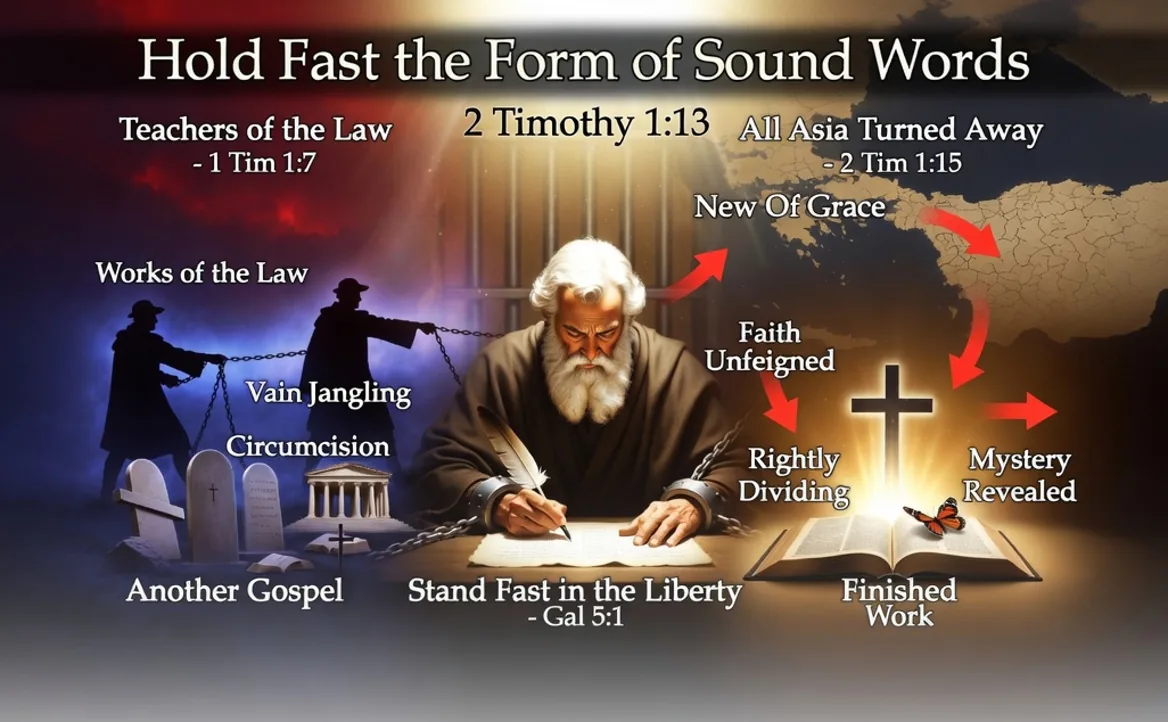
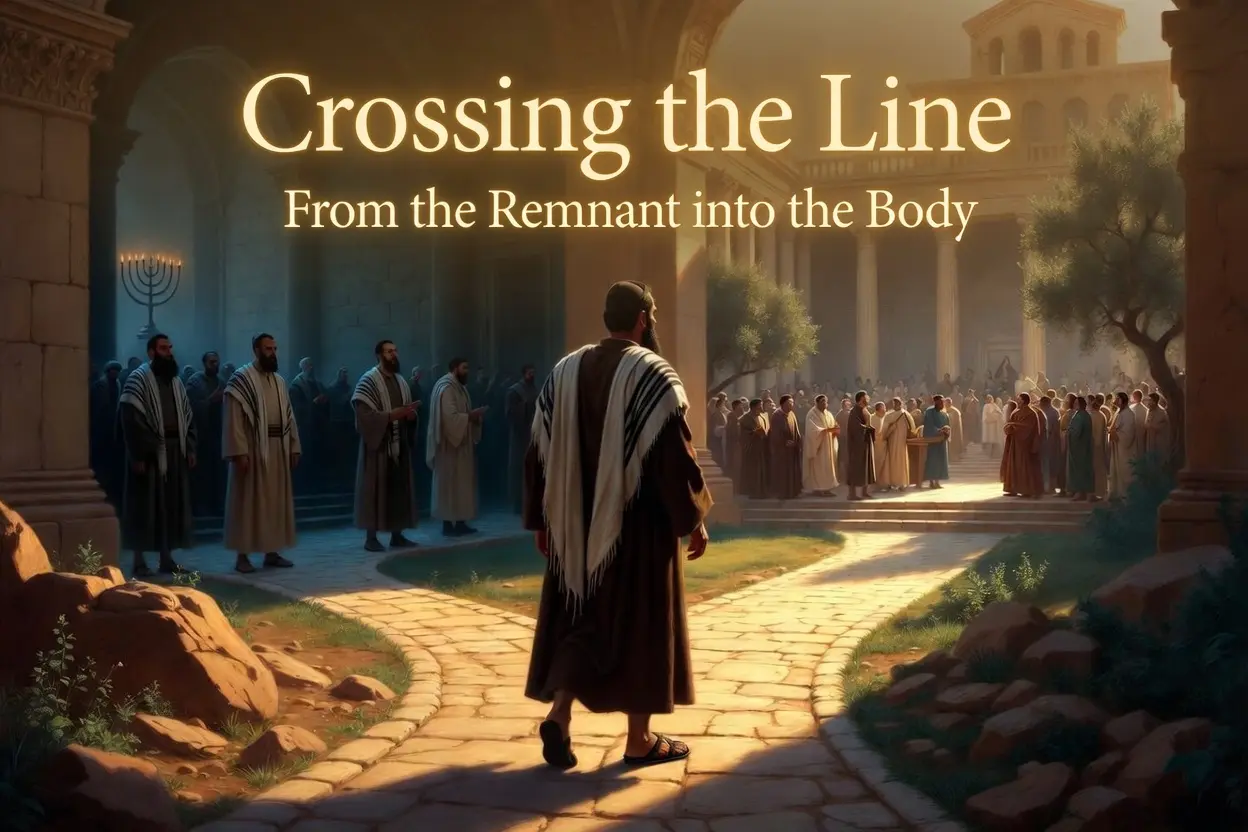

Comments
No comments yet. Be the first to share your thoughts.
Leave a comment